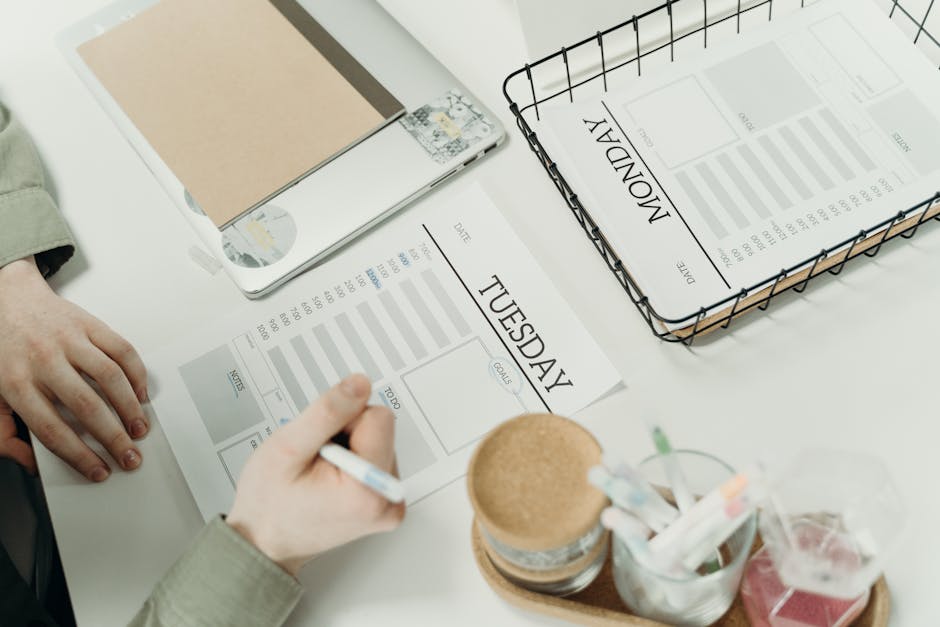
It's a Tuesday morning, and the freelancer sits at a cluttered desk, staring at a browser tab row filled with open projects. As the clock ticks, the intention to dive into a focused work session slips further away, buried under a pile of distractions. The desk surface, cluttered with notes and half-finished tasks, doesn't match the mental sequence for a productive focus block. The temptation to switch tasks lingers, pulling attention away from the work that truly needs to be done.
During this ordinary weekday moment, the freelancer reaches for a notepad to jot down a plan, but the setup clutter makes it difficult to prioritize effectively. Notifications ping from the phone, each one a tiny disruption that erodes concentration. A simple action like muting notifications could clear the path for deeper focus, yet it often gets overlooked in the rush to start working. Without a clear visual cue or a calendar block for a dedicated focus session, the workflow habits begin to falter, leading to a frustrating cycle of task switching and diminished productivity.
The Task Order That Gets Buried
The freelancer glances at the desk, where a jumble of sticky notes, coffee cups, and open notebooks compete for attention. With a quick swipe, the freelancer clears a small space, hoping to create a clearer path to productivity. However, the clutter still obscures the necessary task, making it easy to get sidetracked.
As the browser window fills with tabs, each one a potential distraction, the next useful action remains unclear. The email tab is open, and the notifications keep pinging, each one a reminder of the many tasks waiting in the wings. A quick check of the calendar reveals no designated focus block, a crucial oversight that leaves the workflow feeling chaotic.
Before diving into the work session, the freelancer decides to mute notifications, a small but vital adjustment. This simple action creates a quieter environment, yet the lingering clutter on the desk still creates friction. In this moment, the task order that should guide the day is lost, buried under the weight of distractions and unorganized priorities.
When the Routine Starts to Slip
As the clock inches closer to 10 AM, the freelancer sits at a cluttered desk, surrounded by a sea of open browser tabs. However, as soon as the focus block begins, notifications from email and messaging apps start to pop up, pulling attention away from the task at hand. Each ping feels like a small weight, nudging the freelancer's focus off course.
In this moment, the desk surface does not match the task sequence. The freelancer realizes that without a designated focus block on the calendar, the day feels chaotic. A quick glance at the calendar reveals that no time has been set aside for deep work, leaving the workflow vulnerable to interruptions.
Before diving into the work session, muting notifications becomes a necessary step. This adjustment creates a quieter environment, yet the clutter remains a barrier. The next useful action is buried under setup clutter, and the freelancer is left grappling with the task order that should guide the day. As the clock ticks, the pressure mounts, and the focus that was once attainable begins to slip away, leaving the freelancer wondering how to regain control over the workflow.
Adjusting the Sequence for Clarity
A slightly different version of this problem appears in Managing Energy Not Time, where the sequence changes but the hidden drag feels familiar.
Each tab represents a potential detour from the intended focus block. To regain control, the first step is to mute notifications on the phone and computer. This small action creates an immediate reduction in interruptions, allowing for a clearer mental space.
- Set a dedicated calendar block for the report, ensuring that deep work has a specific time slot.
- Prioritize tasks by placing the report at the top of the to-do list, making it the first item to tackle.
- Clear the desk surface of unrelated items, leaving only the necessary tools for the task at hand.
This decision transforms the workflow, creating a clear path to deep work.
Carrying Forward the New Focus Habit
If this pattern keeps repeating, Focus Without Burnout extends the idea without leaving the niche.
With notifications muted, the freelancer can finally shift gears without the constant ping of new emails or messages. This small shift creates a mental buffer, allowing for a smoother transition to the next task on the list.
Desk planning becomes a crucial part of the workflow. By clearing the desk of unrelated items—like that old coffee cup and the stack of papers from last week—the workspace transforms into a dedicated zone for focused work. The only objects remaining are the laptop, a notepad, and a pen, which creates a visual cue for what needs to be accomplished. This simple act of decluttering not only enhances concentration but also reduces the temptation to switch tasks. As the freelancer begins typing, the clarity of the workspace mirrors the clarity of thought.
Having established this new habit, the freelancer notices a realistic benefit: the time spent on task switching decreases significantly. The next task on the list waits patiently, as the freelancer has set a clear order, making it easier to dive back into the workflow without losing momentum. The desk, now a sanctuary for deep work, signals that it’s time to tackle the next item with the same level of focus.
During that ordinary weekday moment, the freelancer realizes that the browser tab row is cluttered with distractions, making it harder to maintain deep focus. This friction point illustrates how the setup can derail productivity, as the desk surface does not align with the task sequence.
As the freelancer begins to clear the desk and prioritize tasks, the act of focusing on one item at a time becomes a tangible step towards better workflow habits. By establishing this routine, the next useful action is no longer buried under clutter, making it easier to dive back into work without the temptation to switch tasks. Recognizing these friction points is essential; the next time the planning reset occurs, the freelancer can ensure the workspace is ready for deep focus without tools.